
Metabolism
By Dr Joe
How do you treat low blood sugar at a time when you are probably vulnerable and may not be in a position to make the right decisions for yourself.
All it takes is a little preparation in advance and you won’t be caught napping when your blood sugar drops.
Here is what I talk about on the page:
How do you treat low blood sugar
Treat low blood sugar infographic
Treat low blood sugar when the person is unconscious or drowsy
Treat an individual with low blood sugar who is having a seizure
How to prevent low blood sugar
How do you know your blood sugar is low
Before you get to grips with how to treat low blood sugar, it’s important you recognise the symptoms of low blood sugar.
Fortunately, blood sugar drops gradually unless when it is caused by overzealous self-management of diabetes in diabetics.

The adrenergic phase of low blood sugar should be seen as a warning phase. This requires action on your part to rescue the situation before it gets worse.
Low blood sugar symptoms of the adrenergic phase refer to feelings of dizziness, fast heartbeat, shaking of hands and feet, anxiety, blurred or double vision, hunger pangs, sweating. Some people will feel frightened or unnecessarily excitable.
These symptoms mentioned above represent the early phase of low blood sugar which can be remedied very quickly.
How do you treat low blood sugar?
Early intervention to get rid of the low blood sugar is essential with simple steps like:
**Drink a sugary juice straightaway. This is one occasion when you are allowed refined carbohydrates either in the form of a drink or solid sweetie.
So, juice like an orange juice or an apple juice are good to treat low blood sugar within minutes.
The American Diabetic Association recommends consuming 15-20 gm of simple carbohydrate or glucose.
This NHS resource recommends a small glass of fruit juice, a handful of sweets and 4 – 5 dextrose tablets.
**It is important that you check your blood sugar 10 – 15 minutes later after the initial drink or sweets to see if your blood glucose has gone up.
**You will need to repeat the treatment again. Have another drink or another handful of sweets or candies, if your blood glucose is still below 4 mmol/l (72 mg/dl). Then repeat your blood glucose test again after another 15 minutes.
**After that initial step, it’s nice to have either a proper meal that provides a steady release of glucose (complex carb) along with protein and fats or at the very least have a sandwich or some buttered toast.
> It is thought that 15 gm of carbohydrate will raise your blood glucose by 3 mmol/l (54 mg/dl).

You can treat symptoms of low blood sugar by eating any of the following foods below. These will supply you with at least 15 grams of carbohydrate. 15 grams of carbohydrate is expected to correct your low blood sugar within minutes of consumption.
Sweets
5 starbursts
13 skittles
1 tablespoon of sugar dissolved in water
7 jelly beans
1 tablespoon of pure honey
1 tablespoon of jam or even marmalade
13 gummy bears
4 or 5 dextrose tablets
1 tube of glucose gel
Fruits
Half an apple
1 orange
1 small banana
2 circular slices of pineapple
16 grapes
2 tablespoons of raisins
Drinks
A small glass of orange juice
A small glass of apple juice
A small glass of cranberry juice
A small glass of non-diet fizzy drink – Coca cola, Pepsi, Sprite
A small glass of prune juice
A small glass of pineapple juice
A glass of milk
A small glass of pomegranate juice
A small glass of prune juice
A small glass of mango juice

In the absence of those food items listed above, you can use foods like chocolate, crackers, biscuits, cookies, white bread and ice cream to treat low blood sugar. The only problem is that these foods are slow to act. They do correct low blood sugar but do not do so rapidly enough to be considered first choice.
How to treat low blood sugar when the person is unconscious or drowsy
Drowsiness and being unconscious are much more severe symptoms of low blood sugar. These require a deeper professional input but if you are alone with the individual, you need to do the following.
Placing the affected individual in recovery position is imperative. What’s important is not give the individual any of food items listed above until they have regained consciousness. If you do that, there is the risk of aspiration (choking) as their gagging reflex is impaired when unconscious.
What you must do though, is call the emergency services immediately (999 in the UK, 911 in the US). Professional help is needed at this point.
However, if the affected individual has glucagon injection on him/her, then administer the glucagon injection straightaway.
Usually most people will respond to glucagon injection within minutes.
There’s a good chance the emergency services would have arrived by now. But if they haven’t and the individual has woken up, give them any of the food items listed above like a small glass of orange juice, apple juice, dextrose tablets, or a tube of glucose gel.
A slow-release complex carbohydrate food is the next thing to feed the person with. This will give a sustained gradual release of glucose into the circulation and should prevent a relapse into hypoglycemia.
How do you treat an individual with low blood sugar who is having a seizure?
The treatment is just as you will in the case of someone who is unconscious from low blood sugar. Do exactly as I have described above but you will need to wait until the seizures have stopped before administering the glucagon.
Fits or seizures are usually self-limiting and would last only a couple of minutes. Something else you need to do is remove any potential objects that can cause physical harm from around the person when they are having a seizure.
How to prevent low blood sugar
You will find these low blood sugar prevention tips useful if you have had one or two episodes of hypoglycemia or if you are worried about low blood sugar attacks.
Preventing low blood sugar is quite easy. All it requires is a little planning ahead and forward thinking.
Here’s how:
Most diabetics especially those on insulin will have one episode of low blood sugar (hypoglycemia) once or twice in their diabetic life.
This is most likely to happen when you have just been recently diagnosed and you are coming to grips with learning diabetic self-management. As you become more proficient in your diabetic self-management, episodes of hypoglycemia should be fairly rare.
Where you start having frequent hypoglycemic episodes, then something is not right and you must discuss this issue with your medical team.
However, taking the steps below will prevent you from having frequent low blood sugar attacks.
- It’s a good idea to keep an eye on your blood glucose levels quite often by checking it with your glucometer at home or office.
2. Understand the symptoms of low blood sugar. Know them inside out. This is important because you can take steps to prevent low sugar as soon as you think you are about to have one.
3. If you are on insulin or taking medications that promote the secretion of insulin from the pancreas, you should endeavour not to skip meals because your blood glucose will plummet if you do.
> You should be aware that insulin will do its job of clearing glucose from the blood whether you eat or not. So, no starvation periods allowed.
4. As a diabetic, a golden rule is to always have some food item that can quickly raise blood sugar with you all the time. See list above. A sweet drink, a beverage or a handful of sweets or candies are a nice fashion accessory to have on you. Maybe a handful of raisins could be a nice substitute to have if you looking to prevent low blood sugar.
5. Get a glucagon injection pack and take it with you wherever you go. It can be a life saver when you have a severe attack. People who suffer from hypoglycemic unawareness in particular will benefit from this step.
Administering glucagon is easy. Simply mix the powder with the solution in the syringe and give the shot into a muscle.
6. If you are going to do any vigorous exercise, you will need to do one of two things. Either reduce the dose of your regular insulin or have a pre-exercise snack before jumping on the treadmill, cross trainer, exercise bike or lifting those weights.
7. Avoid binge drinking on alcohol. It’s amazing what effect alcohol drunk very quickly can have on your blood sugar levels. You may want to drink slowly over a longer period.
8. You may also want to have a meal before you embark on your drinking escapade. Food will help slow the absorption of alcohol whilst preventing you from drinking lots as your stomach can only take so much.
9. For people who are prone to having hypoglycemic attacks when they fall asleep at night, a pre-bedtime snack like a toast with butter will keep your blood glucose at normal levels whilst asleep.
10. All diabetics taking must carry an ID badge that identifies them as a diabetic. This is useful and it informs people around you when they notice something is wrong. Not a bad idea to let your colleagues in your workplace know about your condition and give them instructions on what to do in case of an emergency.

How do you know your blood sugar is low?
The symptoms of hypoglycemia is how you know your blood sugar is low.
Knowing the symptoms of low blood sugar and recognising them as soon as you suspect you are developing hypoglycemia is the best way to prevent low blood sugar.
This is because you will act to prevent a full-blown attack of hypoglycemia as soon as you know.
If you are unsure whether your blood sugar is low or not, a simple blood glucose test done on the spot will reveal where you stand. If you are diabetic you must have a glucometer at home.
Practically, every type 1 diabetic has a blood glucose monitoring device at home, I would like to think. I believe the same should apply to all type 2 diabetics as well.
For me one way of self-managing your type 2 diabetes and probably reversing it is to do what I preach about in eating to your meter. Probably one of the best things you can do for yourself if you want to reverse type 2 diabetes.
Hopefully you now know how to treat low blood sugar and get rid of low blood sugar without fuss. It’s simple strategies that go a long way in preventing an attack that potentially can cause a lot of harm.
How do you deal with low blood sugar
Here’s a summary of how to treat low blood sugar. You deal with the event by taking the following steps:
- Prepare for possible low blood sugar event in advance.
- Know what the early warning phase symptoms are.
- Act early on the warning phase symptoms.
- Drink a sugary drink, juice straightaway or eat a sweetie.
- Consume 15 gm of simple carbohydrate or glucose.
- Check blood sugar 15 minutes later.
- Have another drink or sweets, if blood sugar still below 4 mmol/l (72 mg/dl).
- Repeat blood sugar 15 minutes later.
- If winning, eat follow-up complex carb.
- If not winning, call emergency services.
Suggested further reading:
How To Supercharge Your Life and Restore Glowing Good Health
Save
Save
Save
Save

Metabolism
By Dr Joe
Symptoms of low blood sugar or what we refer to as hypoglycemia symptoms are variable.
You could get hit with a myriad of low blood sugar symptoms, sometimes without warning. Take it from me. It’s never a bad idea to be prepared.
Here’s what you get on this page:
What The Symptoms of Low Blood Sugar Are
What Is Hypoglycemic Unawareness
Low Blood Sugar In Non-Diabetics
How Low Is Too Low
Why Does Low Blood Sugar Cause Shaking of The Body
Why Do Symptoms of Low Blood Sugar Occur In Diabetics
What Causes Low Blood Sugar Symptoms
Some of the symptoms of hypoglycemia are in actual fact warning signals though, alerting you to the real prospect of the more severe ones to come, if you do not act straightaway.
All of the hypoglycemia symptoms will affect individuals differently. No one individual will experience all of the symptoms of low blood sugar symptoms in one go.
You could liken the onset of symptoms of low blood sugar to driving your lovely car on the highway with the fuel gauge signalling ‘reserve’.
When you are on reserve, the drive is risky. It’s only a question of time before the car runs out of fuel. Running your car on fuel reserve is similar to running your body on low blood sugar.
> The point being, glucose is the energy substrate that our body cells prefer. That is unless you are one of those people on the ketogenic diet which of course means your body cells are now using fat as energy source by default.
Your body doesn’t use fat as energy source by choice. It does so when forced to do so.

When blood glucose levels drop to below a critical level, that is when the symptoms of low blood sugar will begin to manifest themselves.
All of these symptoms of low blood sugar occur because the preferred power agent i.e glucose, your body cells need is not readily available.
All sorts of symptoms then rear their ugly heads to herald what we call hypoglycemia.
What are the symptoms of low blood sugar?
How do you feel when your blood sugar is low? I can tell this much. It is not a pleasant feeling.
Like I said previously, the symptoms of low blood sugar do vary. The list below gives you a taste of what to expect.
- You will probably tremble
- You will feel weak and fatigued
- You may become nervous
- You will probably sweat (sometimes profusely)
- You may feel agitated
- You may have a headache
- You may feel nauseated
- You may feel dizzy or light-headed
- You will have hunger pangs
- You may feel your heart beat much more powerfully banging on your chest wall
- Your heart rate quickens (beats much faster)

Other symptoms of low blood sugar include:
- Your skin will go pale
- You may become confused
- Your memory may fail you at this point
- You become short-tempered and ready to fly off the handle very quickly
- Your vision is impaired (blurred vision or double vision)
- Your speech may become slurred as seen in a drunken state
- You will have difficulty concentrating
- You might even act anti-socially or inappropriately (frightening thought, huh)
- You may have difficulties with co-ordination even when performing simple tasks
- You may experience tingling in your hands, your legs and around the mouth
- You may become unconscious
- You may have seizures
Protective mechanisms will kick in to keep vital organs working when your blood sugar levels drop really low.
For instance, fat stores are mobilised to generate ketones. These ketones will become a substitute for glucose to be used as fuel by your body cells.
That process however does take a while to kick in, and some damage may occur between before that ketogenic conversion takes place.
Usually before that, your body will mobilise your glucose stores called glycogen. This is discussed further below.
Hence, it makes sense to act and correct low blood sugar level as quickly as possible.
If you diabetic, you are probably clued up about how you feel when your blood sugar is low.
In fact, when I was in the medical school some decades ago, one of my university professors used to say, every adult diabetic should have an episode of hypoglycemia at least once.
His reason:
He felt that way the diabetic person will know how to recognise an attack early on in future. Cruel thought? Maybe.
An adult diabetic may recognise an episode of hypoglycemia but what about children diabetics? Well, kids will have to rely on their parents to be vigilant about the symptoms of low blood sugar.
A quick blood glucose test on a child will tell you if your child’s blood glucose is low or not.
What about hypoglycemic unawareness?
In the diabetic club, there is a group of individuals who unfortunately can go from zero to 60 or should I say 60 to zero in minutes. These diabetics have what we call hpoglycemic unawareness.
Hypoglycemic unawareness happens when the individual does not experience the early warning symptoms of low blood sugar like shaking, headache, sweating, fast heartbeat, nausea, feeling agitated etc.
Instead, the individual experiences the more significant symptoms like confusion and drift straight into unconsciousness within minutes.
Hypoglycemic unawareness happens usually to:
- People with type 1 and type 2 diabetics who have had the diabetes for several years
- Diabetics who tend to have frequent hypoglycemic attacks like many hypo attacks in a couple of days.
The theory is that hypoglycemic unawareness occurs because your body had developed tolerance to frequent hypo attacks.
Most of those early symptoms of low blood sugar are secondary to adrenaline release. These progress to the brain-related symptoms if the low blood glucose is not corrected early enough.
That is when symptoms like confusion, seizures and loss of consciousness kick in. These are central nervous system symptoms.
In hypoglycemic unawareness, the adrenaline phase is by-passed with a swift move to the central nervous system (brain-related) symptoms of low blood sugar. This is particularly risky for these individuals especially if they suffer an attack when they are alone.
I used to know a long-standing type 1 diabetic in secondary school who could drift into unconsciousness from being normal in minutes. It used to frighten the hell out of us as we were very young at the time.
Low Blood Sugar in non-diabetics
Low blood sugar is not an event that is exclusive to diabetics. Low blood sugar can also occur in non-diabetics but it is not as common as you will find in diabetics.
This is because the natural mechanisms that protect you tend to kick in as your blood sugar begins to drop.
For instance, low blood sugar will trigger the release of glucagon. Glucagon does the opposite of what insulin hormone does.
> Glucagon causes the breakdown of the storage form of glucose called glycogen to shore up blood glucose levels to normal levels.
If you are metabolically competent as a non-diabetic, these protective mechanisms are available to prevent significant damage resulting from low blood sugar levels.
If you consider yourself to be non-diabetic but you see yourself having symptoms of low blood sugar often I will encourage you to question whether you are in fact non-diabetic.
Non-diabetics having low blood sugar more than once should seek help from their doctor. It is possible that you may in fact be having prediabetes or frank type 2 diabetes. There is probably an element of undiagnosed insulin resistance which would require investigation to uncover.
It may sound counter-intuitive that someone who is having low blood sugar symptoms may in fact be having type 2 diabetes which is a high blood sugar disease. But you will be surprised. Reactive hypoglycemia and fasting hypoglycemia for instance are some of those surprises.
There are several causes of non-diabetic hypoglycemia. I have discussed the possible causes of low blood sugar including reactive and non-reactive hypoglycemia on that page. Go have a look.

How low is too low blood sugar?
As said earlier on, how people respond to low blood sugar will vary from individual to individual. So, the question of how low is too low blood sugar becomes somewhat fluid as responses differ.
However, when blood sugar drops to 2.0 mmol/l (36 mg/dl), then that low is too low blood sugar.
I do experience blood sugars of 3.5 mmol/l (63 mg/dl) and I will still be fine. You may not. If that’s the case, act on it i.e correct the blood sugar levels.
Low blood sugar by definition is actually blood sugar levels of below 4.0 mmol/l (72 mg/dl). A lot of people will not have symptoms of low blood sugar at this level but some will.
> The message here is; if you are experiencing symptoms of hypoglycemia and your blood sugar is below 4.0 mmol/l (72 mg/dl), then do something.
How low is too low blood sugar – certainly blood sugar of 2.0 mmol/l (36 mg/dl) and below, is glucose level that is too low. That is a level that has become critically and dangerously low. Swift action is required.
Why does low blood sugar cause shaking of the body?
One of the symptoms of low blood sugar is shaking or trembling. You begin to experience tremors and you find it difficult to maintain a steady hand.
Why is that:
As blood sugar begins on a downward slope, the body’s defensive mechanisms kick into gear. The idea is to restore blood glucose levels back to normal.
Your body calls upon the storage form of glucose called glycogen to be broken down to its simpler form – glucose. Remember, your body relies on glucose to provide energy as a primary source, unless you have re-programmed your body to use fat.
Glucagon is the hormone that does this job of glycogen breakdown so efficiently. Whilst all of these is going on, the flight or fight response is also triggered.
Where there is flight or fight, adrenaline takes charge. Adrenaline also helps with the breakdown of glycogen too although that is a secondary job for it.
Low blood sugar is a stressful situation. Your body quickly recognises that. The adrenal medulla is called upon to respond to this stressful situation. Your adrenal medulla releases the hormone called adrenaline.
Adrenaline or epinephrine (that’s the other name for adrenaline) prepares you for the fight or flight response. It will certainly help glucagon to break down glycogen stores to attempt to make free glucose available for use by your body cells.
One of the objectives of adrenaline is to change the metabolic process such that the muscles and in particular the brain are protected by making glucose readily available to those two organs.
It is this release and flooding of your body with adrenaline that causes the shaking that your body experiences when your blood sugar is low.

Why do symptoms of low blood sugar occur in diabetics?
Diabetes is a disease of high blood sugar. How come symptoms of low blood sugar occur more in diabetic than non-diabetics?
It sounds counterintuitive that the exact opposite of the disease they suffer from seems to affect diabetics more. In both type 1 and type diabetics the aim of diabetic management is to lower blood glucose levels.
In type 1 diabetics, this is always achieved by the use of the hormone preparation called insulin. There are various types of insulin – fast acting, medium acting and long acting. A great deal of education is involved teaching type 1 diabetics on how and when to administer their prescribed insulin.
How much insulin to administer is just as important as the ‘how’ and ‘when’. All of these variables can lead to problems, one of which is low blood sugar.
As for the type 2 diabetics, the vast majority will lower their blood sugar by changing their diet, altering their weight with or without oral prescription anti-diabetic medications. A small proportion will need insulin.
Those who need insulin will have the same issues as the type 1 diabetics.
What causes low blood sugar symptoms?
Causes of the symptoms of low blood sugar in diabetics are related to overzealous treatment and lifestyle issues inclusive of one or more of the following:
- Administering too much insulin
- Taking too many oral prescription anti-diabetic medications that make your pancreas produce more insulin. The class of medications called sulfonylureas like gliclazide, glibenclamide and the glinides like nateglinide and repaglinide can cause low blood sugar symptoms. Metformin does not fall into this category, you will be glad to know.
- Prolonged intervals between meals
- Eating too little food to match insulin or tablet intake
- Consuming excessive alcohol especially in type 1 diabetics
- Overly vigorous exercise not matched by appropriate food intake or reduction in insulin intake
Generally speaking, causes of hypoglycemia symptoms in diabetics will fall broadly into those categories above.
Usually a quick test blood sugar test will reveal to you if your blood sugar is low or not.
If you are non-diabetic and have experienced symptoms of low blood sugar on more than one occasion, you may benefit from learning the causes of non-diabetic hypoglycemia here and you can see how to treat symptoms of low blood sugar here.
Suggested further reading:
Can This Delicious Elixir REALLY Ease Stress, Boost Energy and ERASE Belly Fat?
Save
Save
Save
Save
Save
Save
Save
Save
Save

Metabolism
By Dr Joe
Do non diabetics get hypoglycaemia; is a question I get asked often.
So, I figured I will deal with this issue and other questions relating to non-diabetic hypoglycemia right here on this page.

Feel free to use the links below to jump down the page to the specific topic but be rest assured that on this page, you will learn about:
Do Non Diabetics Get Hypoglycemia?
Do non diabetics experience dawn phenomenon?
What is normal blood sugar levels for a non diabetic?
What is low blood sugar?
Should non diabetics check blood sugar?
What can cause non diabetic hypoglycaemia?
What is reactive hypoglycaemia and what causes reactive hypoglycaemia?
What causes non-reactive (fasting) hypoglycaemia?
How do you feel when your blood sugar is low?
How to test for non-diabetic hypoglycaemia?
Do I have non-reactive (fasting) hypoglycaemia?
How to treat non diabetic hypoglycemia?
Do non-diabetics get hypoglycemia?
Yes, non diabetics may develop hypoglycemia (low blood sugar). It is often thought that hypoglycemia which is the medical terminology for low blood sugar, happens only in diabetic individuals. That’s not entirely true.
It is true that when it comes to neuro-linguistic programming, you hear the word, hypoglycemia and automatically, your mind flashes to a diabetic individual. At least that’s how the mind of a medical personnel works anyway.
But low blood sugar events are not exclusive to diabetics. Non diabetics also suffer from hypoglycemia although it is a less common occurrence, but beware.
A mis-match between the interaction of blood glucose levels and insulin, the hormone responsible for stabilising your blood sugar levels, is the origin of the non diabetic hypoglycaemia phenomenon.
Non-diabetic low blood sugar can be caused by a variety of conditions which I will discuss further along this page but the point here is that, both diabetics and non-diabetics can develop hypoglycemia.
Do non diabetics experience dawn phenomenon?
Non-diabetic hypoglycemia should not be confused with the dawn phenomenon in non-diabetics. The dawn phenomenon is a condition where there is a rise in blood glucose levels in the early hours of the morning between 2am and 8am.
The dawn phenomenon is more likely to occur in a diabetic than in a non-diabetic.
The dawn phenomenon is a consequence of the diurnal variation of the stress hormone called cortisol. Cortisol causes the release of glucose from the liver by breaking down the storage form of glucose called, glycogen.
A breakdown of glycogen usually stored in the liver leads to elevation of blood glucose level. This glycogen breakdown is induced by cortisol hormone. Cortisol hormone usually rises in the early hours of the morning. This unwelcome but inevitable action by cortisol in the early hours of the morning is what causes the dawn phenomenon.
The non-diabetic dawn phenomenon is the direct opposite of non-diabetic hypoglycaemia. The similarity between the two conditions (if you call it that) is that they are both rare in non diabetics compared to diabetics.
In fact, the dawn phenomenon is so rare in a non diabetic, that should you experience it, then there is a good chance you are insulin resistant. You are probably either prediabetic or have full blown type 2 diabetes. Get checked as soon as you can!
A small rise of blood glucose in the early hours of the morning on account of the cortisol rise can be expected in a non-diabetic. But this rise should be so small that it’s best considered an academic event really. If you are not diabetic, your blood sugar levels should still remain within normal limits in the so-called non-diabetic dawn phenomenon.
So in essence, it’s not really a non-diabetic dawn phenomenon strictly speaking. The message here being; non diabetics don’t usually exeperience the dawn phenomenon.
If your blood sugars show a significant rise in the early hours of the morning i.e the dawn phenomenon, and you are not a diabetic, you need to see your doctor to be screened for type 2 diabetes.
What is normal blood sugar levels for a non diabetic?
If we are going to be talking about low blood sugar in non diabetics, it makes sense to know what normal blood sugar ranges are for non-diabetics.
You’ve got to know what is normal before veering into what is not normal.
Indeed normal blood sugar should apply to everybody. Diabetics and non diabetics should be striving to achieve the same normal blood sugar levels. Achieving normal blood glucose is just a little more challenging for diabetics in comparison.
On this account, here is what the American College of Clinical Endocrinologists recommend as normal blood sugar levels for both non-diabetic and diabetics too.
- Fasting blood sugar should be 99 mg/dl (5.5 mmol/L) or less
- 1-hour blood sugar after meals should be 140 mg/dl (7.8 mmol/L) or less
- 2-hour blood sugar after meals should be 120 mg/dl (6.6 mmol/L) or less
This is what every individual regardless of whether diabetic or otherwise should be aiming for every day.
For instance, a non-diabetic fasting blood sugar levels should be kept between 4.0 mmol/l (72 mg/dl) and 5.5 mmol/l (99 mg/dl).
Indeed, so should diabetics too, because fasting blood sugar levels within that range implies a very good blood glucose control if you are diabetic.
Keeping your blood glucose within this range is good for the optimal metabolic health of everybody.
Maintaining your blood glucose within this range, both for fasting and after meals, is an important step in taking control of your health.
With that in mind, it begs the next question:

What is low blood sugar?
The definition of low blood sugar is somewhat fluid as symptoms of low blood glucose may appear at different levels in different individuals.
Strictly speaking, low blood glucose (hypoglycemia) is blood glucose below 4.0 mmol/l (72 mg/dl). For somebody like me, I don’t experience any symptoms of hypoglycaemia at blood glucose levels of 3.5 mmol/l (63 mg/dl) but you might be different.
Some literature use a blood glucose cut-off point of 2.5 mmol/l (45 mg/dl) as hypoglycemia. Practically everyone will have symptoms suggestive of hypoglycaemia at and below 2.5 mmol/l (45 mg/dl).
At the end of the day, it really doesn’t matter whether your blood glucose level is 3.7 mmol/l (66.6 mg/dl) or 2.2 mmol/l (39.6 mg/dl), if you are experiencing the typical symptoms of low blood sugar, or you checked a friend’s blood sugar if they are feeling queasy or out of sorts and the sugar level is below 4 mmol/l (72 mg/dl), you might as well take necessary steps urgently to correct the problem.
The level becomes academic in the end if you have symptoms. It only becomes a question of severity rather than the matter of the presence of it.
Should non diabetics check blood sugar?
This is an interesting question for me. I firmly believe that non-diabetics should check their blood glucose levels. You don’t necessarily have to obsess over it but every person above the age of 40, certainly over 45 years of age should own a blood glucose monitoring device (glucometer) at home. That’s my opinion.
Diabetes is tearing through populations globally. We used to think type 2 diabetes was more common in the Western hemisphere but the developing world like the Pacific Islands are catching up and catching up fast.
Who would have thought smaller nations in the far east and the pacific, would be heading the type 2 diabetes League tables?
Diagnosing type 2 diabetes early is the way to go and one way of detecting prediabetes is to test your blood sugar following meals. Once you suspect you may be diabetic, using the values above, you go to your doctor to confirm or refute the condition.
Of course, your results would also be highly dependent on what food you ate. Refined carbs will definitely spike your blood sugars.
If you have a glucometer at home, you are in luck. With a glucometer you can easily test your blood sugar or that of the relative with a little finger prick test and call for help straightaway, if the reading is low. I will talk about what you can do to resolve the problem very quickly in the later part of this article.
What can cause non diabetic hypoglycemia?
What causes low blood sugar without diabetes is another way paraphrasing the question and here is your answer.
I have already mentioned that you can have low blood sugar without having diabetes but I need to stress a further point. In most normal individuals without diabetes, hypoglycaemia is not something they should go to bed worrying about.
You have got enough stuff to worry about in your day to day life. Why add low blood glucose to your list of worries if you are non diabetic.
Low blood sugar in non diabetics is a rare event, but it can happen in certain circumstances. The culprit for hypoglycemia (low blood sugar) is insulin. Insulin is the main driver for blood glucose. If you have too much of insulin in circulation at any one time and you are not insulin resistant, your blood sugar will plummet.
That said, there are 2 broad classifications for hypoglycemia.
- Reactive
- Non-reactive (fasting)
What is reactive hypoglycemia and what causes reactive hypoglycemia?
Reactive hypoglycaemia typically is an event that occurs secondary to having a meal. It happens within a few hours of having a meal, typically a refined carbohydrate-laden meal.
The affected individual has a meal, a huge surge of insulin occurs in response to the meal.
This huge insulin surge results in an overzealous blood glucose clearance from the circulation into the cells, blood sugar levels drop like a stone. That in essence is reactive hypoglycaemia.
The insulin over-secretion can be detected by a blood test several hours after the initial episode of reactive hypoglycaemia.
Current thinking is that reactive hypoglycaemia is a forerunner to type 2 diabetes. So get yourself screened for diabetes if you ever experience an episode of reactive hypoglycaemia.
The following are causes of reactive hypoglycaemia:
- Prediabetes
- Being overweight or frankly obese
- Surgery of the stomach making consumed food hasten its journey from the stomach to the small intestine
- A heavy meal of refined carbohydrates

What causes non-reactive (fasting) hypoglycaemia?
Non-reactive hypoglycaemia is low blood sugar that is unrelated to an eating episode. Some people refer to non-reactive hypoglycaemia as fasting hypoglycaemia.
The following may cause non-reactive hypoglycaemia.
-
- Insulin secreting tumours of the pancreas
- Alcohol when it interferes with liver function.
- Fasting
- Eating disorders like anorexia, bulimia.
- Medications that affect liver function like salicylates for pain relief, quinine used to treat malaria, sulphonamide antibiotics, pentamidine.
- Diseases that affect the liver and the kidneys.
- Pregnancy
- Hormonal problems that affect the level of hormones such as cortisol, glucagon, growth hormone negatively. Adrenal gland problems are particularly noteworthy.
- Accidental administration of insulin injection or taking of some other anti-diabetic medications.
Low Blood Sugar in Non-Diabetics: How does it feel?
You feel awful and unwell when your blood sugar is low. One thing with the symptoms of low blood sugar in non diabetics and diabetics is that they overlap with so many other conditions in medical practice.
Obviously if you experience any of the typical symptoms below, you should either quickly check your blood glucose level or call for help for someone else to assist you and act accordingly.
The feeling of low blood sugar is unpleasant and it includes the following:
-
- You feel weak
- You begin to tremble
- You become nervous
- You sweat
- You feel your heart beating through your chest
- You feel agitated
- You may have a headache
- You may have a feeling of nausea
- You may feel dizzy or light-headed
- You will have hunger pangs
- You heart rate quickens
- You look pale-skinned
- You become confused
- You become short-fused and temperamental
- Your vision is impaired
- You may become unconscious
- You may have seizures
That list is by no means exhaustive, but if you have had low blood sugar, you will identify with some of those symptoms.
Do I have non diabetic hypoglycaemia? | How to test for non-diabetic hypoglycemia?
How do you know you have non-diabetic hypoglycemia or how is non-diabetic hypoglycaemia diagnosed or tested for?
The simplest way to diagnose hypoglycaemia under any circumstances is to check blood sugar levels when the person is experiencing symptoms.
If your blood glucose reading is below 4 mmol/l (72 mg/dl) in the presence of symptoms, that is hypoglycemia by definition regardless of whether you have diabetes or not. That is an on-the-spot diagnosis for that hypoglycaemic event.
Now if you want to specifically answer the question: do I have non-diabetic hypoglycemia, you may want to have tests done to pinpoint the exact cause of the problem.
And the tests would vary depending on the type of non-diabetic hypoglycaemia.

Do I have reactive hypoglycaemia? | How to test for reactive hypoglycaemia?
To diagnose the reactive hypoglycaemia, you will need to be tested on your response to food or have the standard oral glucose tolerance test (OGTT).
Some practices use the Mixed Meal Tolerance Test (MMTT) where you are given a drink consisting of refined carbs, protein and fat. The Mixed Meal will provoke an insulin response from your pancreas.
With a load of insulin in in your blood circulation, your blood glucose level is tested to see how your body responds every hour for about 5 hours.
To do this test for reactive hypoglycemia, a fasting period of 10 – 12 hours prior to the test is necessary for validity of the test.
Another test for reactive hypoglycemia instead of the Mixed-Meal Tolerance Test, is the Standard Oral Glucose Tolerance Test (OGTT). Your medical facility will perform a concentrated glucose test using a 75 gms glucose drink. Hmmm, tasty, if you have a sweet tooth. But not so nice, if you don’t.
Even though your blood glucose is drawn hourly for up to 5 hours during the test for reactive hypoglycemia, in truth the result of the first 2 hours makes more sense.
Most individuals with reactive hypoglycaemia will show a significant drop of blood glucose to hypoglycaemic levels within 2 hours and you will experience the feeling of low blood sugar within that time frame.
Having said that, it makes sense to extend the test beyond 2 hours to be thorough.
Do I have non-reactive (fasting) hypoglycaemia?
How the test for non-reactive or fasting hypoglycaemia is done is a lot more involving. It may require you fasting for up to 72 hours. Now you see what I mean.
During the 72-hour fast period, your blood is drawn several times for blood glucose levels.
In general, fasting hypoglycaemia test tends to revolve around the suspected cause of the problem. Sometimes, it may be necessary to test for your blood levels of insulin. The insulin test is done at the point where the blood glucose reading is low, if insulin secreting tumour of the pancreas or diabetes is suspected.
Very high levels of insulin in the blood circulation will suggest insulin-secreting tumour of the pancreas. A further scan of the abdomen will throw more light on the issue as the tumour should be seen on CT Scan.
If other causes of non-reactive hypoglycaemia are suspected, like problems related to the adrenal gland, investigations will be tailored in that direction.
How to treat non diabetic hypoglycemia – The non diabetic hypoglycaemia diet
Going on from the last point, controlling non-diabetic hypoglycemia is very much dependent on the cause of the problem.
However, a few generic rules apply in the control of non-diabetic hypoglycemia. If you do undertake these measures, you will have few (if any) episodes of non-diabetic hypoglycaemia, unless there is an identified cause in which case, the treatment has to be directed at the cause.
For instance, if an insulin producing tumour of the pancreas is the cause, then surgery to remove the tumour will be essential and really should fix the problem.
If the cause is that of the adrenal glands, then obviously, this will have to be dealt with too by directing treatment accordingly.
What generic measures can you use to control non-diabetic hypoglycemia?
These measures are sometimes described as non-diabetic hypoglycemia diet but they are to all intents and purposes a re-structuring of how you eat and what you eat.
>> You need to eat a lot more vegetables especially leafy green vegetables. Root vegetables are fine as well, so long as they are prepared in a way as not to alter their glycaemic index to a high one.
>> Which brings me to next point. Eat starchy foods that are complex in nature. That means whole grain foods. Whole grain foods like oatmeal, brown rice, quinoa, bulgur wheat, millet, triticale, usually have a high fibre content. This makes for a slow release of glucose into the blood.
>> A non-diabetic hypoglycemic diet is enabled by a slow digestive process. This leads to a gradual breakdown of the carbohydrate leading further to a gentler rise in blood glucose following your meal.
>> Another non-diabetic hypoglycemic diet tip is to include protein in your diet. I will encourage more plant proteins like you find in legumes – beans, peas and lentils, in preference to animal protein.
>> Of course, having animal protein in your non-diabetic hypoglycemic diet is still allowed but keep the red meat to a minimum. White meat would be a better choice as would eggs if that’s your thing.
>> Dairy products can be part of your non-diabetic hypoglycaemic diet but low fat dairy is better unless you are on a low carb high fat diet.
>> Of course, a low carb high fat diet is another approach to treating hypoglycemia without diabetes. Low carb high fat diet typically does not lead to insulin spikes as blood sugar levels are usually steady with this type of diet.
>> If you are someone with hypoglycemia without diabetes, it would make sense to limit or avoid altogether refined carbs. Refined carbs like white rice, rice cakes, white bread, cup cakes, sodas, typically cause blood sugar spikes and insulin spikes as a consequence, so best avoided.
>> Some doctors and nutritionists will recommend frequent small meals as a way of dealing with non-diabetic hypoglycemia. This approach is worth a try.
>> The frequent small meals approach may help so long as you keep an eye on your calories because the danger of eating small meals frequently is that the “small” is open to misinterpretation and you could suddenly be facing obesity with this advice.
>> What you eat with this method of eating is also important. Remember complex carbs.
>> Be careful with dried fruits. Dried fruits are devoid of moisture which means they are packed with lots of natural simple sugars. Even though they are fruits and are supposed to be healthy, these dried fruits can spike your blood sugar very quickly causing a subsequent crash of blood sugar afterwards.
I’m talking about dried fruits like dried apricots, raisings, dates, apples – not your best friend, if you have non-diabetic low blood sugar issues.
>> With non diabetic hypoglycemia diet, you need to be careful with white potatoes especially when baked. Sweet potatoes are preferred for non diabetic people who have low blow blood sugar problems. Better boiled than baked though.
>> If you don’t have diabetes and have low blood sugar problems, it would be a good idea to avoid coffee, be it regular coffee or worse still Starbucks coffee, Costa coffee. Not a good idea.
Whatever you do, if you experience an episode of non-diabetic hypoglycaemia, your immediate action should be to correct the hypoglycemia first by having a sweet drink, sugar tablet or intravenous glucose injection depending on the severity of the hypoglycemia.
For instance, if someone is unconscious, an intravenous glucose administration will be the way to go.
If you are going to have any of these dried fruits (preferably not an emergency situation by the way because that would be the wrong approach), please have them with cruciferous vegetables or leafy green vegetables.
Take care of the emergency situation first. If you need to call for help, do so, even if it means calling the emergency services. What you do in the medium to long term would be different but deal with the immediacy that situation demands in the first instance.
Suggested further reading:
The #1 WORST food for your skin, joints & blood sugar?
Save
Save
Save
Save
Save
Save
Save
Save
Save
Save
Save
Save
Save
Save
Save
Save
Save
Save
Save
Save
Save
Save

Metabolism
By Dr Joe
On this page you are going to get the low down on why you should fast and I answer the question; can I exercise whilst doing intermittent fasting. Also I give the background to why fasting should be incorporated into any bodybuilding plans.
You can use the links below to jump straight to each sub-headline in this article if you are in a rush.
Why Should I Fast
Can I Exercise Whilst Doing Intermittent Fasting
Do Bodybuilders Use Intermittent Fasting
Fasting as a concept is not new to mankind. It’s been going on for centuries.
In centuries gone by, fasting was inevitable because the hunter-gatherer could not make a catch every day.
You’ve got to be very lucky for you to make a catch all the time. When you came home empty-handed, well that’s just tough luck – you fasted.
Fast forward to our current times, the entire place is awash with food at least in the developed world anyway.
So much so that diseases of overeating like obesity, type 2 diabetes, heart attacks are running riot and now constitute the biggest killers in the developing world.

Could we do something about it?
Of course, we can and I can tell you categorically that fasting or intermittent fasting is one intervention that can make a difference.
To a lot of people, fasting as a concept is poorly understood and do have a lot of questions about this lifestyle. So, I will attempt to answer some questions on this page regarding intermittent fasting and why it should be something to consider…
…especially if you are overweight and are threatened by obesity-related diseases.
On this page, I will answer questions such as why should you fast, whether you should eat frequently or less often, whether to exercise during fasting, if bodybuilders need intermittent fasting. Have a good read. You will be glad you did because the info here if science-backed.
Why should I fast?
This is a broad question and I will give you an overview answer here, because I have done quite a piece on the benefits of intermittent fasting on other pages. Go have a look.
In simple terms, intermittent fasting gives your body an opportunity to “breath”.
Eating all the time means your body has to constantly deal with calories coming in. You are of course going to use up some of those calories you consume for your daily energy expenditure.
The problem is human beings aren’t very good at equalizing calories in and calories out. Even people who count calories don’t get it right for a myriad of reasons not least food labelling by food manufacturers is far from accurate.
We are notoriously guilty from under-estimation of food calories. The net effect is that we overconsume calories which translates to excess calories being stored as fat to be used at a later date. That “later date” never arrives and every day we do the same thing resulting in more fat being laid down.
What intermittent fasting does is give your body a break from newer calories being introduced into your body. That way you can draw on the excess fat you stored in the preceding days. Using up the excesses of the previous overconsumption forms the basis of why you should fast.
This prevents you from not just using up the stored fat but stops you from storing new fat if you do things properly.
You can therefore use intermittent fasting for initial weight loss as well as maintain your weight.

Should I eat smaller meals frequently or should I eat fewer meals?
There’s always been assumption that eating small meals frequently like six to seven times a day is good for your health. When outcome measures like appetite reduction, increase in metabolism and reduction in blood glucose have been examined in different studies on eating frequently, the results have been inconsistent.
Some of the findings especially regarding appetite reduction from frequent eating is contradictory for instance.This study found that there was a 27% reduction in the amount of consumed calories in seven obese non-diabetic individuals when meals were split up into five compared to when the whole meal was eaten in one go.
However, this study looked at whether eating 3 times a day or 8 times a day made a difference to your appetite. The participants were made to eat 3 times a day for 3 weeks and then 8 times a day for another 3 weeks. The study found that the composite appetite score to be higher in the weeks the subjects ate 8 times a day than when they ate 3 times a day.
What about this study that looked at the effect of eating frequency and fat burning? They made the participants in the study eat 3 meals a day and 6 meals a day. At the end of the study, there was no difference in fat burning when the participants ate 3 times and when they did 6 times a day.
Also the “desire to eat” and feeling of hunger were found to be higher when the subjects were on the 6 times a day eating frequency than when they ate 3 times a day.
Someone who is very interested in these matters is Dr Longo who works at the University of Southern California’s Longevity Institute. His studies have shown that eating less frequently is a whole lot better than eating frequently. What’s interesting is that his studies have been looking at outcomes like longevity, weight loss and disease prevention.
His findings have now moved the opinion in favour eating less frequently as a way of optimizing your health.
Why are these findings important?
They are because one way of eating less is by skipping meals which is what you do when you intermittently fast. When you have science backing you up that skipping meals is a good thing, then you can confidently adopt that lifestyle to put your health back on track.
Do I need to exercise while doing intermittent fasting?
Another question that bothers people is; can you workout while intermittent fasting?
Answer: Of course, you can workout while intermittent fasting. Working out during intermittent fasting is no more dangerous than doing so at any other time. As I will explain in a few seconds, workouts during fasting periods has immense benefits and is to be encouraged.
Whether you need to exercise whilst doing intermittent fasting actually depends on your goals and how fast you want to attain your goals. Intermittent fasting has a lot of benefits and whether you choose to fast would depend a great deal on what benefit you want to exploit.
For instance, intermittent fasting can assist you in losing weight and you can lose weight by just fasting using any of the IF protocols.
Fasting will help you lose fat.
However, if you want to lose the weight quickly, then adding exercise to your intermittent fasting efforts will help you reach your goals a lot quicker than fasting alone.
A combination of intermittent fasting and exercise is one of the best things you can do for your optimal health because both measures have a synergistic effect and consequently accelerates the benefits.
Here’s some thing you should know about exercise while intermittent fasting.
Most weight loss strategies involving diet alone result in muscle loss. About 30% of the weight lost with diet alone is muscle loss.
Exercise is protective of muscle mass. Exercise helps you protect lean mass especially any exercise that involves Resistance Training (Weight Training).
Exercise whilst doing intermittent fasting not only prevents loss of your current muscle mass but it can actually help you gain more muscle. Don’t forget that muscle is one of the most metabolically active tissues in the body.
Muscle soaks up most of the glucose that enters your circulation when you eat especially when you are insulin sensitive.
Message here is: exercise while intermittent fasting is a good thing. I encourage it.
Protect the muscle mass you have currently by exercising during your fast periods and you will fire up your metabolism apart from the fact that you will have an enviable lean look.
An example is people doing the 16:8 intermittent fasting model where you are expected to avoid eating for 16 hours of the day and compress all your daily eating into an 8-hour window.
What has been shown to very effective in fat burning is engaging in an exercise regime at the end of the 16 hours before you commence eating. That really works.
And that’s not just for the 16:8 IF plan only. Exercise can be added to any intermittent fasting plan to make it more effective. The different IF plans can be mixed and matched as well whilst adding exercise into the mix.
This mixing and matching technique has been adopted by John Romaniello and Dan Go who created the Fat Loss Forever diet. It is an intermittent fasting plan that combines the LeanGains plan, The Warrior diet and the ever popular Eat Stop Eat into one single method.
The trick seems to work a treat especially as they included a couple of exercise regimes along with cheat days. Like I said before, any fasting dieting program that incorporates work outs is a firecracker when it comes to fat loss or weight management.
This is due to the fact that, you have two systems working together to produce results that are metabolically awesome with immense health benefits. It’s well worth a look. Here is the link again.

Do bodybuilders use intermittent fasting?
Body builders are usually people who are very serious about muscle building. Intermittent fasting does not directly lead to muscle building. Intermittent fasting will help a body builder burn fat leaving lean muscle for the individual.
But intermittent fasting can indirectly help a bodybuilder achieve their goal of muscle building because fasting has been shown in a study to boost human growth hormone production by an average of 1,300 percent in women, and nearly 2,000 percent in men.
A boost in human growth hormone is one of the benefits of intermittent fasting.
Human growth hormone (HGH) is a hormone that has many functions in the body. HGH peaks at puberty and as we get older, this hormone begins to decline.
Human growth hormone promotes protein synthesis. This is how human growth hormone helps with new muscle building. Bigger muscles means more strength and more endurance and as you can tell, these are characteristics that every bodybuilder would cherish. Not only that human growth hormone helps with fat utilization too.
Another thing related to protein synthesis is that high growth hormone facilitates muscle repair and recovery. This is very important to every bodybuilder as the intense exercise that bodybuilder engages in can pose quite a huge demand on the muscles recruited during each workout.
HGH also builds stronger bones and boosts energy – benefits that a bodybuilder would not turn down any day of the week.
Research appears to have proven human growth hormone production can be boosted by intermittent fasting. It’s got to be a cheap and effective way to help to reach your goal, if you are a body builder.
Anyone trying to get in the bodybuilding game would be doing themselves a huge favour by incorporating intermittent fasting into their plan. Intermittent fasting provides you with that natural supply of human growth hormone. At the very least, it gives you a head-start.
Of course, if you want to facilitate things further you can add HGH supplements like this one to make things even easier for you. You need endurance for better workouts when you want to bodybuild. More human growth hormone, more endurance. More endurance, more intensity and more volume.
You can’t argue with that, can you?
Suggested further reading:
Can This Delicious Elixir REALLY Ease Stress, Boost Energy and ERASE Belly Fat?
Save
Save
Save
Save
Save

Metabolism
By Dr Joe
On this page, you’ll get to know everything about how long to do intermittent fasting for in terms of each fasting episode (and why) as well as how many weeks or months an intermittent fasting program should last.
As a bonus, you also get to know about the dos and don’ts of intermittent fasting. Very important!

You can do intermittent fasting for as long as you want to. Intermittent fasting is a fairly harmless life hack, that’s packed with immense benefits.
It all depends on what you are trying to achieve with intermittent fasting. That would determine how long you can do intermittent fasting for.
However, if you want a specific figure to guide you, I will tell you that a reasonable intermittent fasting program should last between 6 weeks to 6 months. Why is this?
Well, Read on and you will understand why.
In answering this question though; it’s never clear to me what the intention behind the question is.
Would you like to know:
- How long each fasting episode should last for?
- Or how long an intermittent fasting program should last for?
How about I answer both questions, huh. That way, we have all our bases covered. Sounds like a good idea?
Okay. Good. Let’s do it then.
How long each intermittent fasting episode should last for?
Each fasting episode should last for a minimum of 16 hours to get the benefits of intermittent fasting. Hence, the 16/8 intermittent fasting is the most popular.
The reason is that you want to use up your immediate energy stores, so you can start drawing on your energy reserves.
That’s how you lose fat with intermittent fasting. You have to enable your metabolism to start burning the stored fat. That fat you hate. That fat that is dangerous to your health, especially the visceral fat.
You’ve got to start burning that stored fat. Otherwise that fasting episode will become an exercise in futility.
Guess, how long it takes for your body to use up the immediate energy reserves? The glycogen in your liver, that is. It takes about 10 – 12 hours to burn your immediate energy stores up before you can start burning the fat you saved up for that “rainy day” that never comes.
Instead, you add more to the fat stores. That’s what makes us fat, because we never get to use up those fat stores.
So, as you can see, if you fast for 16 hours, and it takes you 10 – 12 hours to use up all of the immediate energy stores, you are in effect going to draw on your fat reserves for only 4 – 6 hours out of the 16 hours. Hope you can do the math.
If you want to achieve more, then your strategy will be to increase that interval period where you need to use up those fat reserves. Hence, a 16-hour fast period is the bare minimum. If you can extend that fast period longer, you begin to ramp up the benefits of intermittent fasting even more.
==> How about 20 hours fast. That will give you 8 – 10 hours fat burn time.
==> 24 hours fasting will give you 12 – 14 hours fat burning interval. Cool!
==> Are you strong enough to fast for 36 hours? If you are, then you get 24 – 26 hours of fat burning. OMG, now we are talking some serious fat burning.
You get the picture.
A reality check but do not be scared
Now here’s a reality check. A 36-hour fast will not come easy for most people. That much I know. But you don’t have to set your sight that high. At least not when you’re a rookie anyway.
If you are new to intermittent fasting, go for the bare minimum of 16 hours first. That’s the 16/8 intermittent fasting protocol. The 16/8 intermittent fasting protocol gives you an 8-hour eating window which is not that hard to accomplish.
Once you conquer that, then you can gradually increase the fasting interval by adding one extra hour each time. There are people who will fast for 3 days or longer. Don’t be jealous of them. Do what you are comfortable with, okay.
My longest fast was 36 hours but now I only do 24 hours on each fasting episode and I am happy with that. Serves my needs. Which leads me to:
How long should an intermittent fasting program last for?
This wholly depends on your objective.
Your intermittent fasting program can last for a month, 2 months, 6 months, 1 year or you can have a fasting program that lasts forever as part of your on-going eating plan.
There are no set rules. Once you get into it, you will see what I mean. In fact, you may start to enjoy intermittent fasting actually. Hard to believe, I know. But you do. I do enjoy it. Okay, may be I’m weird, but hey…
I know that some people may want to know how long to do intermittent fasting for to see weight loss results. Then again, that would vary from person to person. In particular, how you manage your diet during the intermittent fasting eating window will play a huge role in your intermittent fasting results.
What you eat matters a lot during the eating window.
On the whole though, you will start to see intermittent fasting results in 2 weeks, if you fast for 3 days a week. You will get better weight loss results with intermittent fasting, if you add a workout to the plan.
What’s your intermittent fasting objective?
You may start intermittent fasting because you want to lose some weight, let say 11 lbs. Choose a plan and go with it until you hit that target of 11 lbs.
Or you may want to lose a certain percentage of body fat.
Get yourself an electronic body fat estimator and latch on to a plan and off you go. Monitor what you are doing, to see if you have lost the percentage of body fat you plan to lose.
If it takes you 8 weeks to lose 11 lbs, then it’s up to you if you wish to continue or not.
It is difficult for anyone to prescribe how long you should or can do intermittent fasting for. Because I, for instance, do not know you personally. Only if someone is coaching you on a one-to-one basis can they tell you how long you should do intermittent fasting for.
Intermittent Fasting good for Reversing Insulin Resistance and Muscle Building
You may start intermittent fasting because you want to reverse your insulin resistance. That objective might take you a little longer to achieve, so you could be fasting intermittently for say 5 – 6 months.
If your objective is to build muscle with intermittent fasting, then it may take you as long as 4 – 6 months or even longer. With muscle building, you will want to consider adding a workout regime to the fasting.
You also should consider doing your workout routine which must include resistance training towards the last 2 hours of the fasting window to accelerate the process.
In essence, I am saying the workout should be the last activity you do before you resume eating. That has been shown to be very effective.
You can tweak your fasting schedule for weight maintenance
Here is the thing.
Even if you have hit your goal, you shouldn’t rest on your laurels just yet. How about considering maintenance intermittent fasting protocol to keep your goals sustained?
Let’s say you were doing alternate day fasting where you may have fasted for 4 or 5 days a week and you have now hit your target weight loss objective. How about you reduce that to fasting 2 days a week for maintenance.
How about you adopt the 5:2 intermittent fasting method where you cut down on your calories requirement to 20 or 30% for 2 days a week. Feasible? I sure think so.
How about you start skipping breakfast say 5 days a week and have your first meal of the day at 1pm and have one more meal at 8pm. Nothing else to eat again until 1pm the following day. Feasible? Definitely.
You can adopt any method that suits your professional and social life and tweak it to fit your lifestyle and carry on doing intermittent fasting for as long as possible and reap the benefits for life.
I personally always skip breakfast and I don’t have my first meal until about 1.30pm, if I am lucky. Sometimes 3pm on a busy day at work. Then my main meal of the day is usually around 8pm. Lately I go straight for the 24-hour fast. Even better. Works for me!
The book below explains the 5:2 fasting plan. Get a copy from Amazon.com or over here on Amazon.co.uk

How often can you do intermittent fasting?
This also up to you. There are no set rules on how often you can do intermittent fasting for. You can have an initial phase where you hit your goals after a couple of weeks. Then have a break for say 3 months and eat the routine way for the 3 months.
Then, re-start intermittent fasting again for another 3 months, have a break for 3 months and do the same thing again.
You can use a 2 month ON, 2 months OFF model, 4 months ON, 4 months OFF – (Switch ON/OFF). Do this repeatedly. No rigid rules about how often you can fast intermittently.
If the question is about how often to fast during the week, it would depend on the IF plan you adopt. The 5:2 requires you to fast 2 days a week (Monday and Thursday, for instance). Alternate day fasting is as the name suggests, every other day.
The 2 days you fast in the 5:2 plan are not actually a total fast. It only requires you to hold back on your calories to 500 Calories for those 2 days.
The true 24-hour fast may require you to do this twice or three times a week, if you can handle that frequency.
If you can’t, even one day a week is okay until you get comfortable with it and you can then try 2 days a week.
Even one day a week is certainly better than what you are currently doing. It will still work. It’s just going to take longer.
So, if you want to know how many weeks to do intermittent fasting, all I can say is there’s no ‘one size fits all’ approach.
You can fast for 4 weeks, 8 weeks, 12 weeks, 16 weeks, 26 weeks, 52 weeks (1 year), 2 years, 4 years, 10 years, fast intermittently for life. You can also use the switch ON/OFF model too in terms of frequency. The choice is yours and it should be based on what you want to achieve.
What are the do’s and don’ts of intermittent fasting?
When it comes to the do’s and don’ts of intermittent fasting, the rules are fairly flexible. But achieving your goal does require you to do certain things that will improve your chances of getting to the promised land.
Use these do’s and don’ts as tips for intermittent fasting as well.
Okay here are some of the do’s of intermittent fasting:
1. Do your exercise or workout close to your feeding time. This has been shown to be very effective producing really good results especially for people who want to build muscle. Some people use BCAAs (Branched Chain Amino Acids) or Bang energy drinks to break their fast.
2. The follow up to that is that you should have your main meal after your workout or exercise routine. You may have another meal afterwards. But must be within the eating window of the intermittent fasting plan.
3. You can take bcaa supplement just before your exercise. It’s not going to hurt your results. If anything, it is actually a good thing as bcaas contain essential amino acids. BCAAs help with muscle building and muscle bulk maintenance. See article on the advantages of using BCAAs.
4. On fast days, one way of coping is to have warm beverages. But absolutely calorie-free sweeteners only are allowed in your beverage. This is particularly important in the evenings. The time you will be most tempted to cheat.
5. For those on alternate fasting day plan, ensure you slash your calories to 500 Calories, maybe 600 Calories if you are a man. Having a good dose of leafy greens can give you a feeling of fullness. Whilst controlling your calorie intake at the same time.
6. Having proteins on fast days can also be a good idea. White meat like Turkey, Chicken, Goose or Broad beans for vegetarians can let you hold up the fast more effectively.
7. Reconstitute your macronutrients on your workout days and rest days. Carbs should constitute 60% of your meal on days you exercise and have high fat diet on rest days. Maintain the protein content the same on all days.

And some of the don’ts of intermittent fasting:
- Do not do your exercises in the evenings on fast days. Exercise has been shown in a lot of people to trigger hunger. Meaning you might be tempted to eat when you shouldn’t.
2. Do not add a lot of milk to your coffee. Only use half or teaspoon of milk when having tea or coffee. Milk does contain lactose which is sugar. This could derail the plan. Only use a small amount.
3. Use your fasting period to do stuff. Don’t sit idle. Getting busy will stop you thinking about food.
4. Don’t keep changing your feeding window if you are on the plan that allows food at certain times. If your eating window is between 12 Noon and 8pm, try and maintain that consistency every time. It’s all about teaching your body to adapt to a new way of eating and fasting.
5. Do not go to social events where the place will be awash with food on your fast days. The temptation of having so many food choices and so much food around might be too much for you to resist.
6. On your feed days or eating window as the case may be, you should exercise caution in how much food you consume. There’s no need to stuff your face with so much food in an attempt to compensate for the fast period.
It is not a feast or famine ethos and you should refrain from seeing it as such. Eat sensibly!
Above all, be resilient. It’s not as hard as it appears. Start small and build up.
If you like your coffee, you may be also interested in the answer to the question: does coffee break a fast?
What do you think of what you have read on this page? Got something to add? Got a compliment?
Share your experience with me and other readers by leaving a comment below. Say something. Don’t be shy!
Suggested further reading:
How to Avoid Complicated Diet Rules and Prevent Rebound Weight GAIN
Save
Save
Save
Save

Metabolism
 By Dr Joe
There are a thousand and one ways to lose weight. Depending on who you listen to, each method is saddled with advantages and disadvantages.
There’s always going to be some element of inconvenience no matter how robust your method of fat loss is.
Intermittent fasting is just one way of fat loss. There’s no doubt that intermittent fasting will make you lose fat.
That includes the subcutaneous fat that alters your body shape as well as the visceral fat, the internal fat you don’t see but is just as dangerous to your health as driving your car on an icy road in the night without headlights.
I had a guy come up to me the other day and said to me;
“Joe, I can’t believe you are recommending people starve themselves”. Hmm, nope, that’s not quite the case, bro.
With intermittent fasting no one is recommending you starve yourself to death. If you don’t eat, you are starving. That is correct.
But no one is asking you to do that in an uncontrolled manner. The operative word is “intermittent”. Yes, it is fasting but you do it intermittently. It gives your digestive system a break, allows your body to detox. I hate that word “detox”.
> Intermittent fasting enables your body to get rid of the excesses that we unwittingly put into our bodies in particular the refined sugars, the starchy food overdosing, the hydrogenated fats. We all overdose with a lot of macronutrients without realizing it.
It’s interesting that intermittent fasting for fat loss is taking us back to what our ancestors did thousands of years ago but theirs was circumstantial rather than deliberate. We simply eat too much than our bodies need, hence the obesity epidemic in the developed world. I remember watching Dr Michael Mosley’s documentary about fasting. He titled the program ‘Eat, Fast and Live Longer’.
In the documentary Michael spoke to a centenarian who still runs marathons at a ripe old age of 101. Yes, 101 years old and he still runs marathons.
> The centenarian said, “In poor countries, people die of starvation and in rich countries people die of overeating”. How true.

How to do intermittent fasting for fat loss – The Principles
As the old man said, us living in the developed world eat way too much. No one wants you starve to death as may happen in developing countries (although that’s not so much the case these days). In the same vein, we are killing ourselves with overeating over here.
In a way I would argue that intermittent fasting seeks to bridge that gap between overeating and starvation. Some sort of moderation is the key to optimum health. You might not admit it to yourself but if you carefully analyse your food intake vis-à-vis calorie consumption, it will become obvious how much excess calories you are bombarding your body with.
Yes, there’s a whole bunch of individuals who watch what they eat quite carefully. Even those individuals who make healthier food choices still consume just a little bit more than they need on a daily basis.
The net effect being as we get older and metabolism slows down mainly due to less physical activity, the weight gradually creeps in. I have a friend whom I used to envy his figure when he was in his 30s. He was quite particular about what he ate and he played tennis twice a week at the time. Fast forward to his 40s and he now spots a tummy bulge. He was one individual I thought would remain fit looks-wise for a long time but he has faltered…just like many of us.
Why has that happened? He’s fallen into the same trap of eating more than necessary not in one go but incrementally over the years and once you relax on your level of physical activity which is not unusual as we get older, the weight creeps in like a thief in the night. Totally unwelcome!
Dieting is hard enough as it is. Weight loss gurus don’t make it any easier with conflicting advice all over the place. There is a huge amount of advice on the “what to eat” but none about “when to eat”.
The sad aspect to all of these is that “what to eat” is muddled, it leaves most people befuddled.
Why don’t we keep one aspect a lot less confusing? That’s the gap intermittent fasting is trying hard to fill. Let’s talk about the “when”. Intermittent fasting focuses on the “when” rather than the “what”. Brad Pilon is one of the protagonists of modern day intermittent fasting or IF as it is now known in internet parlance.
Hear Brad:
> “The actual act of dieting is very difficult because you still have to eat every day. So every couple of hours you are making a decision about food. The thing I like about fasting is you do not have to do that. I like to use the analogy of an on–off switch instead of a dimmer.”
Switching of food for a period of time seems like a good idea and can be incorporated into your weight loss regime.
You can use intermittent fasting to:
- Achieve your weight loss target in the short to medium term.
- Maintain your ideal body weight once you have hit your target in the long term.
You don’t have to employ intermittent fast (IF) for both objectives. It doesn’t matter if you have a preference for a particular weight loss program like Slimming World, Weight Watchers, The Biggest Loser, HMR Diet, Jenny Craig, Volumetric diet, Raw Food diet, Atkins, Flexitarian, Slim-Fast, Vegan, Paleo, Spark Solution, DASH diet, Mayo clinic diet, MIND, Engine 2 diet, Mediterranean diet (need I go on, there are hundreds more).
Use your preferred diet to sort out the “what”.
Reach your weight loss goal and tune in intermittent fasting to maintain your attained ideal body weight in the long term. How’s that for a suggestion. That’s one way.
> Another way is to employ intermittent fasting to meet both objectives. Use an aggressive intermittent eating IF plan to lose the weight you want to drop off, then go easy and use a different IF protocol to maintain your ideal weight for as long as you care.
Remember intermittent fasting (IF) gives your body that little calorie vacation and as such an opportunity for your body to raid the fat bank, deploying the excess fat you don’t need to store for your immediate energy needs.
Don’t forget too that intermittent fasting has other benefits other than weight loss only.
Which brings me nicely to the “how”
How to intermittently fast – Choose any of these intermittent fasting plans
There are various intermittent fasting IF protocols. Yes, IF does pose some challenges especially fitting it around your professional and social life.
Intermittent fasting for fat loss is a lot, lot easier to adopt when you are retired because your diary is more accommodating than people running around to eek out a living whilst looking after a young family.
But there are hundreds of thousands of people who work, have busy lives but still adopted the intermittent fasting IF lifestyle and have made it work. It just takes a little creativity on the part of the individual, if he/she is serious about it.
As usual with an idea, trail blazers will chop and change a concept within its framework to forge something that works. If their IF plan works, the idea will be promoted to interested parties. So what you will find today is a bundle of different formats of intermittent fasting being promoted usually as diets.
The net result being that you really should be able to find some IF format that will work for you. You can even get clever and mix and match some of intermittent fasting plans.

Here are 5 Intermittent Fasting IF plans or protocols to choose from:
- UpDayDownDay Diet
This is also called the Alternate Day diet. This intermittent fasting diet for fat loss was started by James Johnson, M.D. As the name suggests, you eat your normal meals that meet your calorific needs on one day, then you fast the following day. One day normal, fast the next. Simple as that.
What’s important is that the fast days require you to consume only 20% of your normal calorific requirements. So if your normal calorific input is say 2300 Calories per day for instance, you have that on your “eat normal” days but you consume 460 Calories on your “fast days”. Simple.
Suitable for: Someone who’s keen to lose weight and able to exercise restraint on the “eat normal” days by not overcompensating for the previous “fast day”.
2. The Warrior Diet
Started by Ori Hofmekler. It is designed to contract your calorie intake into a 4-hour window in a day. The other 20 hours are meant for fasting. This requires you to have your meal at night, the thinking behind it being that humans are nocturnal species (I wonder who gave Ori that idea), so we sync our eating with the natural circadian rhythm.
Feed the body in the night, rest, let the body repair itself whilst you are sleeping and wake up ready to face the world in the morning with all your stored energy ready to rumble. Whilst you go about your business during the day fasting, you draw on the reserves you saved up the night before. Cool!
Suitable for: People who are less disciplined when it comes to dieting but can still follow instructions. You may sneak in a very small snack during the 20-hour fasting time. The Weight Watchers kind of person will suit this plan because you are allowed a small “sin” during fast.
3. The Fast Diet
This IF intermittent eating plan was initiated by Dr Michael Mosley. I believe this is one IF eating plan that you could adopt and use for a good while yet. Michael personally used his derived eating plan on himself and he documented his journey in a TV documentary for the BBC.
He has since then put his experience in a book called the Fast Diet. Essentially with this eating plan Michael goes easy on the fasting idea.
What Michael suggests is that you eat normally for 5 days in the week but you have to choose 2 days in which you restrict your calories to 500 Calories for 24 hours. 5 days normal eating, 2 days of calorific restriction. Simple. How you distribute the 500 Calories in your fasting days and what days of the week you choose to have the 500 Calories is up to you. See Michael’s book here on Amazon.com and here on Amazon.co.uk
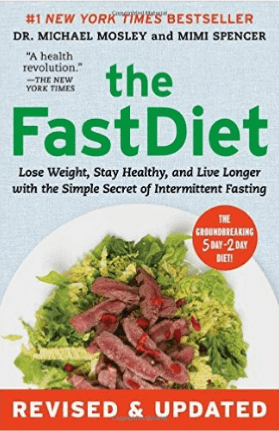
Suitable for: Anyone who wishes to deep their toe in the IF world and wants a slow start to their journey. But you should be capable of showing some discipline in the fast days. This plan is also useful for someone in it for the long haul.
4. The 16:8 IF plan (Leangains plan)
This is one intermittent fasting plan that can be used for weight maintenance. The essential thing here is that you fast for 16 hours and squeeze your meals within an 8-hour eating window. The beauty of this 16:8 IF plan is that you can actually vary it to suit your working life or social schedule. What might suit me may not suit you.
For instance, I am perfectly happy to skip breakfast without any hassle at all. So for me my main meal could be had at 7pm and not bother having another meal until midday or 1pm the next day. Easy, peasy for me.
On the other hand, if the idea of skipping breakfast is completely abhorrent to you or maybe your type of work might make it a little tricky for you to skip breakfast, that’s okay too. Have an early breakfast at 6am to get you through the day and eat nothing else until 10pm. That’s a work around.
You can adopt an “eating window” that fits your lifestyle. Just look for a convenient 8 hours that suits you and stick to it.
Possible “eating window” suggestions include:
- 12pm – 8pm
- 2pm – 10pm
- 4pm – Midnight
- 6am – 2pm
- 7am – 3pm
- 10am – 6pm
- 11am – 7pm etc, you get the drift.
Customize it to fit around your schedule.
Suitable for: People who also want to dip their toe in the intermittent fasting waters. Simple to implement as you only need to adjust your eating pattern. If you like you can split your meals into three, so long as you eat them within the 8-hour eating window.
That said, you may defeat the weight management purpose by doing that because 3 meals translate to 3 chances of overeating. Not what I would advise.
5. Eat Stop Eat
I did mention Brad Pilon, a gentleman from Ontario earlier on in this post. Brad is one of the leading figures as far as intermittent fasting is concerned. He brought intermittent eating or fasting to the fore and ran with it. Brad’s method of fasting is a lot more involving but it pays off big time.
Brad’s suggestion is that you take a break from eating for 24 hours and give your body a total rest, although certain things are allowed during the 24-hour fast, for instance calorie-free drinks.
You should look to have this 24-hour fast one day a week or depending on your weight loss goals, you could do fast for 2 days a week. Like I said most of these IF eating plans can be customized.
If say, you are looking to lose weight, you could do the 24-hour fast for 2 days in a week. After you attain your weight target, you take the foot of the fasting pedal and do the fast one day a week or even every other week especially if you are assisting your body with exercise to help you burn the fat for weight maintenance.
Can you begin to see how you can manipulate the situation depending on your personal circumstances?
Suitable for: Anyone who really is serious about the concept of intermittent fasting as a way of life. Brad is a leader in this field and has done a lot of work. He is the go-to guy as far as intermittent fasting is concerned and you can learn a lot from him.
What happens when one fasting diet guru reviews another?
Well Brad Pilon, author of the Eat Stop Eat did a review of the Dr Michael Mosley’s TV documentary for the BBC.
See Brad’s Review of the documentary HERE >>
Save
Save
Save
Save
Save
Save



Dr. Joe